The short version
- A roustabout company working under an operator MSA usually needs general liability, commercial auto, workers compensation with employers liability, and an umbrella, plus the endorsements that make the operator an additional insured.
- Most certificate rejections for lease crews are not about missing policies; they come from missing endorsements, such as completed operations additional insured status, primary and non-contributory wording, or a Texas workers comp waiver of subrogation.
- Texas Chapter 127 voids indemnity for the operator's own negligence unless the indemnity is supported by insurance, so the insurance section of your MSA is where most of your real indemnity exposure is decided.
- Pollution from small spills, hot work on tanks and equipment you haul between leases are the exposures a standard contractor policy most often leaves thin.
What an operator MSA usually asks a roustabout company to carry
Roustabout and lease maintenance work touches almost everything on a producing lease: tank batteries, flowlines, wellhead hookups, location cleanup, pumping unit work, small construction and a lot of driving between leases. Operators know that, so the insurance exhibit in a typical MSA reads like a full contractor program.
The numbers vary by operator and by the size of the work, and we do not publish what any specific operator requires. What follows are ranges that commonly show up in the insurance sections we read. For a fuller breakdown, see what limits operators require and the MSA insurance requirements guide.
Two points matter more than the limits themselves:
- The MSA usually asks for coverage, not just limits. "Commercial general liability including contractual liability, products and completed operations, and sudden and accidental pollution" is a coverage specification. A policy with the right limit and the wrong form still fails.
- The umbrella has to follow form over each underlying line the MSA names. If the MSA says the umbrella must sit over employers liability and auto, an umbrella that only schedules GL does not satisfy it.
| Coverage | What MSAs commonly ask for | What to check |
|---|---|---|
| General liability | $1M per occurrence / $2M aggregate is common | Contractual liability intact, products-completed ops included, no oilfield or pollution exclusion broader than the MSA allows |
| Commercial auto | $1M combined single limit is common | Symbol 1 (any auto) or the symbols the MSA names; hired and non-owned autos |
| Workers comp / employers liability | Statutory WC; EL often $1M/$1M/$1M | Texas waiver of subrogation endorsement; every state where crews actually work |
| Umbrella / excess | Commonly $5M to $10M, sometimes less for small scopes | Follows form over GL, auto and EL; additional insured and P&NC carry up |
| Pollution | Sudden and accidental at minimum; some ask for contractors pollution liability | Whether "sudden and accidental" is a real endorsement or just assumed |
| Equipment | Rarely a stated limit; MSAs often require a waiver on your own equipment | Inland marine or equipment floater with a waiver of subrogation |
The endorsements that actually get the certificate approved
An ACORD 25 certificate is a summary. The operator, and the ISNetworld or Avetta reviewer working for them, wants to see that the policy has been endorsed to do what the MSA says. These are the endorsements a roustabout program usually needs, using standard ISO and Texas form numbers. Your policy may use a carrier-specific form that does the same job; the reviewer will want to see the wording either way.
- Additional insured, ongoing operations (CG 20 10) and completed operations (CG 20 37), or a blanket equivalent. The operator wants to be an insured for your work while it is happening and after you leave. ISO split these in 1993, so ongoing-only wording does not cover completed operations. See what a blanket additional insured endorsement is.
- Primary and non-contributory (CG 20 01). Your policy pays first and does not ask the operator's policy to share. See primary and non-contributory explained.
- Waiver of subrogation on GL (CG 24 04), auto (CA 04 44) and Texas workers comp (WC 42 03 04). The Texas WC form is different from the NCCI form used in many other states, and reviewers notice. See waiver of subrogation in the oilfield.
- Notice of cancellation to the certificate holder. The ACORD 25 says the certificate does not change the policy, so a promise of notice has to come from an endorsement.
- Designated insured on auto (CA 20 48), when asked. This names the operator on the auto policy. By its own wording it does not broaden coverage; it confirms who is an insured.
MSA clause to endorsement
Where roustabout coverage usually falls short when the certificate is checked
Most rejections we see from lease crews fall into a short list. None of them mean the company is uninsured. They mean the paper does not prove what the MSA asked for, or the policy was bought for a different kind of contractor. The certificate rejection guide covers the general pattern; these are the ones specific to roustabout work.
| MSA requirement | Where the gap usually is |
|---|---|
| Operator as additional insured for ongoing and completed operations | Policy has a blanket AI form that only covers ongoing operations, or only applies where the written contract is signed before the work starts |
| Insurance primary and non-contributory | Certificate box checked, but no P&NC endorsement on the policy |
| Waiver of subrogation on all lines including WC | GL and auto waivers present; Texas WC waiver (WC 42 03 04) missing or written as a scheduled waiver naming a different entity |
| Umbrella follows form | Umbrella excludes or limits pollution, or does not schedule employers liability |
| Sudden and accidental pollution | GL carries a total pollution exclusion with no buyback |
| All owned, hired and non-owned autos | Auto policy lists scheduled vehicles only; crew members driving personal trucks to location are not covered for the company |
| Named insured matches the contracting entity | MSA signed by the LLC, policy issued to the owner as a DBA or to a sister company |
Sample certificate: where reviews fail
- 1Named insured mismatch. The certificate says "LLC," the MSA was signed by the "Inc." Reviewers match names exactly, including DBAs.
- 2AI and waiver boxes blank. ADDL INSD and SUBR WVD are empty on the general liability line, so the reviewer cannot see the operator is covered.
- 3Auto symbol too narrow. Only scheduled autos are shown. Most MSAs want any auto, or owned plus hired and non-owned.
- 4Umbrella limit short. A $2M umbrella against a $5M requirement fails, even when everything else is right.
- 5Workers comp waiver and EL limits. No waiver of subrogation on comp, and employers liability at $500K where $1M is commonly required.
- 6Description of operations too vague. "Holder is additional insured" with no mention of primary and non-contributory, completed operations, or the endorsement forms.
- 7Notice of cancellation. The certificate itself cannot promise 30 days notice. That takes an endorsement on the policy, and reviewers know it.
Exposures that are specific to lease maintenance work
Underwriters price roustabout work as general oilfield labor, but the claims that hurt a lease crew tend to come from a few specific places.
Hot work around tanks and production equipment
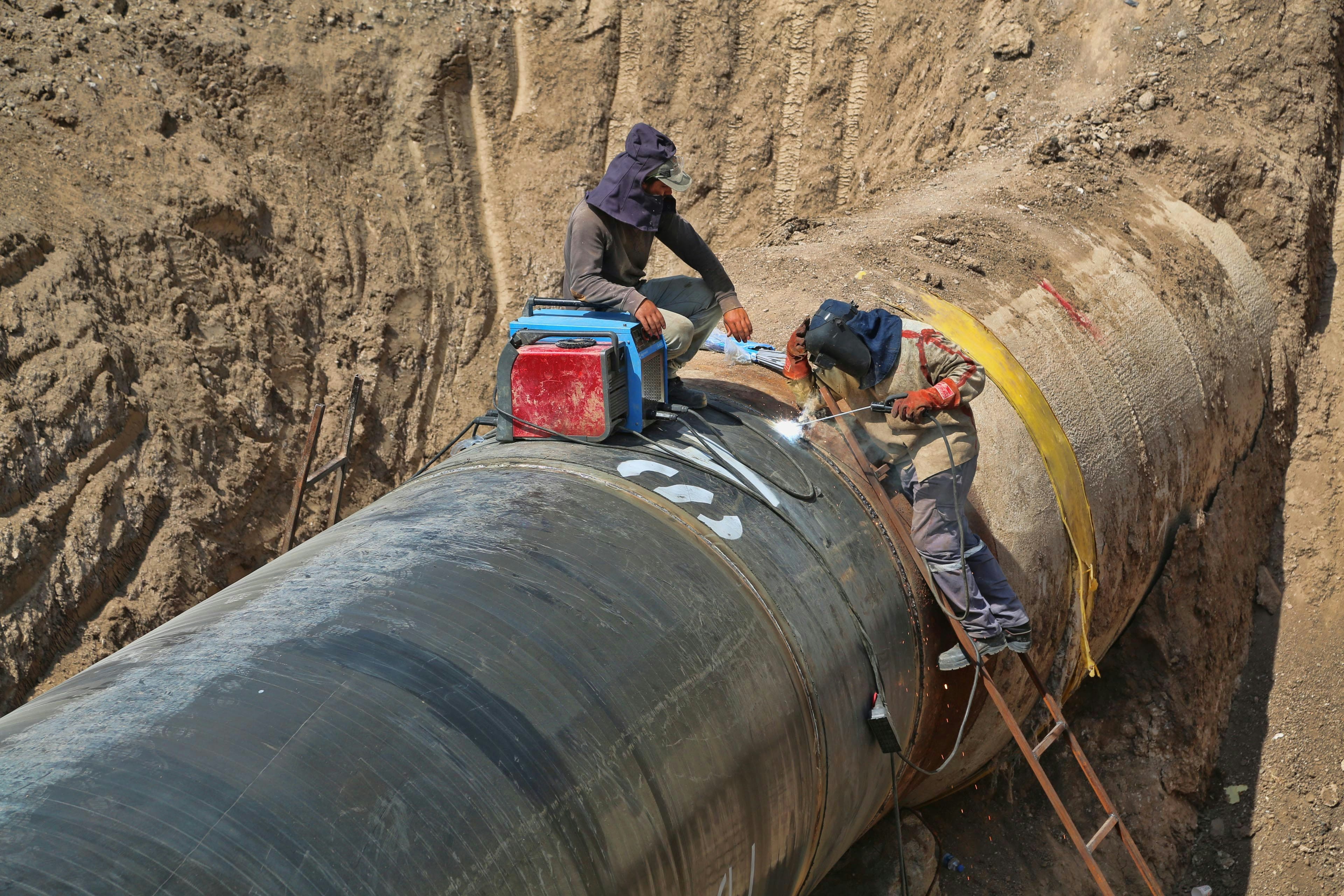
Welding and cutting near tanks, flowlines and vessels is routine for a lease crew. OSHA's oil and gas hazard guidance lists hot work, mobile engines and other ignition sources among the causes of fires and explosions at well sites. Some GL forms written for the oilfield carry hot work conditions or exclusions that the owner never reads. If your crew welds, the policy has to say it covers welding.
Small spills that turn into cleanup bills
Lease crews break into lines, change out valves and move fluids. The standard GL pollution exclusion removes most of that exposure unless the policy carries a sudden and accidental buyback, and even then the reporting windows are short. If the MSA asks for contractors pollution liability, that is a separate coverage, not a checkbox on the GL. See oilfield pollution liability.
Driving between leases
Crew trucks, trailers with welding rigs or small equipment, and employees who drive their own trucks to location. OSHA's oil and gas hazard page states that highway vehicle crashes are the leading cause of fatalities among oil and gas extraction workers. Operators know this, which is why the auto section of the MSA is rarely negotiable. See oilfield auto insurance.
Equipment you own and move
Backhoes, skid steers, welding machines and trailers. Many MSAs make each party responsible for its own equipment and require you to waive recovery against the operator. If your equipment policy has no waiver of subrogation, you are in breach of the MSA the moment equipment is damaged on the operator's location. See oilfield equipment insurance.
Knock-for-knock indemnity and Texas Chapter 127
Most operator MSAs use a reciprocal or "knock-for-knock" indemnity: each side takes responsibility for injuries to its own people and damage to its own property, regardless of who was at fault. For a roustabout company, that means you are agreeing to defend and indemnify the operator if one of your hands is hurt on location, even if the operator's own negligence caused it. More detail is on the knock-for-knock indemnity page.
Texas limits this. Under the Texas Oilfield Anti-Indemnity Act (Tex. Civ. Prac. & Rem. Code Chapter 127):
- §127.003 voids an agreement to indemnify a party for personal injury, death or property injury caused by that party's sole or concurrent negligence, when the agreement pertains to a well for oil, gas or water.
- §127.005 makes an exception when the parties agree in writing that the indemnity will be supported by liability insurance. For a mutual indemnity, the obligation is limited to the extent of the coverage and dollar limits each party agreed to obtain for the other. For a one-way (unilateral) indemnity, the amount of insurance required may not exceed $500,000.
- §127.004 carves certain losses out of the Act entirely, including property injury from pollution (and its cleanup) and reservoir or underground damage. For those, the Act's protection does not apply, and the clause is judged under general Texas contract law.
What this means in practice: the limits you agree to carry in the insurance exhibit are the measure of the indemnity you are giving. Agreeing to a $10M umbrella that is "for the benefit of" the operator is not just an insurance decision. See does Chapter 127 require mutual insurance.
Knock-for-knock allocation
Read the insurance clause and the indemnity clause together
Chapter 127 ties enforceability to insurance the indemnitor agreed in writing to provide. If the MSA requires your insurance to "support" your indemnity, your policy limits and endorsements are doing legal work, not just compliance work. A lawyer should read the indemnity language; we read the insurance side against it.
Workers comp: Texas lets you opt out, most MSAs do not
Texas lets most private employers choose whether to carry workers compensation. Texas Labor Code §406.002 says coverage is generally elective. An employer that does not carry it has to notify the Division of Workers' Compensation (§406.004) and tell employees whether it has coverage (§406.005). A non-subscriber sued by an injured employee also loses the common-law defenses of contributory negligence, assumed risk and fellow-employee negligence (§406.033).
In practice, most operator MSAs require statutory workers comp and employers liability anyway, and ISNetworld and Avetta account requirements usually check for it. A roustabout company running a non-subscriber plan should expect to either buy a WC policy or negotiate an exception before onboarding. See do oilfield contractors need workers comp in Texas.
Chapter 127 also says the Act does not affect a benefit conferred by the Texas workers compensation statutes (§127.006). Your WC policy and your indemnity obligations are separate questions, and both need to line up with the MSA.
Subcontractors and the flow-down problem
Roustabout companies often bring in a welder, a backhoe operator or a vac truck on a day rate. The MSA almost always says your subcontractors must carry the same insurance you do, name the operator as an additional insured and waive subrogation. If they do not, the gap lands on your policy, and many contractor GL forms exclude or limit coverage for work done by uninsured subcontractors.
The fix is mechanical: a written subcontract that flows the operator's insurance and indemnity terms down, current certificates with endorsements on file before the sub sets foot on location, and a check that each sub's umbrella and auto line up. A one-person welding contractor with a personal auto policy and a low-limit GL is a common weak link.
How MSA insurance requirements flow down
What to send if you want the MSA reviewed
The fastest review starts with the documents the operator will actually compare:
- The insurance and indemnity sections of the MSA (or the whole MSA if you are not sure where they are).
- The ISNetworld or Avetta insurance requirements, or the deficiency notice if a certificate was already rejected.
- Your current certificate and, if you have them, the policy endorsement schedules.
We read the MSA against the program and tell you what the operator is asking for, which endorsements are missing, and where your indemnity exposure sits under Chapter 127. That is the review; there is no obligation attached to it. Basin-specific notes for lease crews are on the Permian Basin and Eagle Ford pages.
Common questions
What insurance do I need for a small roustabout company to get on an operator's approved vendor list?
Usually general liability, commercial auto, workers compensation with employers liability, and an umbrella, each endorsed to name the operator as an additional insured, be primary and non-contributory, and waive subrogation. The exact limits come from the operator's MSA and its ISNetworld or Avetta requirements. See what insurance a small roustabout company needs.
My certificate shows $1M GL. Why did ISNetworld still flag it?
Reviewers check endorsements as well as limits. Common reasons are a missing completed operations additional insured endorsement, a P&NC box checked without the endorsement behind it, a missing Texas WC waiver of subrogation, or a named insured that does not match the company on the account.
Do I have to carry workers comp in Texas to do roustabout work?
Texas law makes workers comp elective for most private employers (Tex. Labor Code §406.002). Most operator MSAs and prequalification platforms require it anyway, so in practice a roustabout company that wants operator work usually needs a WC policy or a negotiated exception.
If my hand gets hurt because of the operator's mistake, do I really have to indemnify the operator?
Under a knock-for-knock MSA you agree to, but Texas Chapter 127 voids indemnity for the operator's own negligence unless the indemnity is supported by insurance the parties agreed to in writing. If it is, the obligation is limited to the coverage and limits agreed. Have a lawyer read the indemnity clause; have your agent read the insurance clause against it.
Does my GL cover an oil spill my crew causes on the lease?
Often only partly. Standard GL forms exclude pollution. Some oilfield GL forms buy back sudden and accidental pollution with tight discovery and reporting windows. Gradual leaks and cleanup costs usually need contractors pollution liability.
Can my welder subcontractor work under my insurance?
Generally no. Your MSA almost certainly requires subcontractors to carry their own insurance on the same terms. Using an uninsured sub can leave you paying the claim and in breach of the MSA.
Sources
- Tex. Civ. Prac. & Rem. Code ch. 127 (Texas Legislature). Sections 127.003, 127.004, 127.005 and 127.006: voided indemnity, exclusions, insurance-supported exception and $500,000 unilateral cap.
- Tex. Labor Code ch. 406 (Texas Legislature). Sections 406.002, 406.004, 406.005 and 406.033: elective coverage, non-subscriber notices and lost common-law defenses.
- OSHA: Oil and Gas Extraction, Hazards. Highway vehicle crashes as the leading cause of oil and gas extraction worker fatalities; hot work and ignition hazards.
- IRMI: Additional Insureds and Completed Operations. CG 20 10 limited to ongoing operations after the 1993 ISO revision.
- IRMI glossary: primary and noncontributory. Definition of primary and non-contributory as used in contract insurance requirements.
- Matthiesen, Wickert & Lehrer: Workers Comp Subrogation Waiver Endorsements. Texas waiver of right to recover endorsement WC 42 03 04 and the "All Texas Operations" blanket wording.
- IRMI glossary: designated insured endorsement. Auto designated insured endorsement for entities seeking insured status for vicarious liability.
This page explains insurance, not law. Have your attorney review indemnity and contract language; our job is making the insurance match it.
Keep reading
Contract requirements
The operator sent me an MSA. What insurance does it actually require?
Contract requirements
What does the Texas Oilfield Anti-Indemnity Act mean for my MSA and my insurance?
Contract requirements
What does knock-for-knock mean in my MSA, and what insurance does it take?
Contract requirements
ISNetworld rejected my certificate of insurance. What do I fix?
Questions
What insurance does a small roustabout company need?
Coverage
Does my oilfield GL cover a spill, or do I need separate pollution coverage?