The short version
- For a water hauler the auto policy is the program: most of the exposure, most of the MSA language and most of the certificate rejections sit on the truck.
- Hauling produced water creates pollution exposure on the road, which a standard auto policy excludes; the usual answers are an auto pollution endorsement such as ISO CA 99 48 or a transportation pollution policy.
- Whether federal MCS-90 filings and the higher FMCSA minimums apply depends on whether you haul across state lines and how the load is classified; for oil and listed hazardous materials, 49 CFR 387.9 sets a $1,000,000 minimum versus $750,000 for nonhazardous for-hire freight.
- Texas Chapter 127 covers transporting produced water and brine as a well service, but its exclusion for pollution property damage means spill cleanup indemnity is not protected by the Act.
Why the auto policy is the whole program for a water hauler
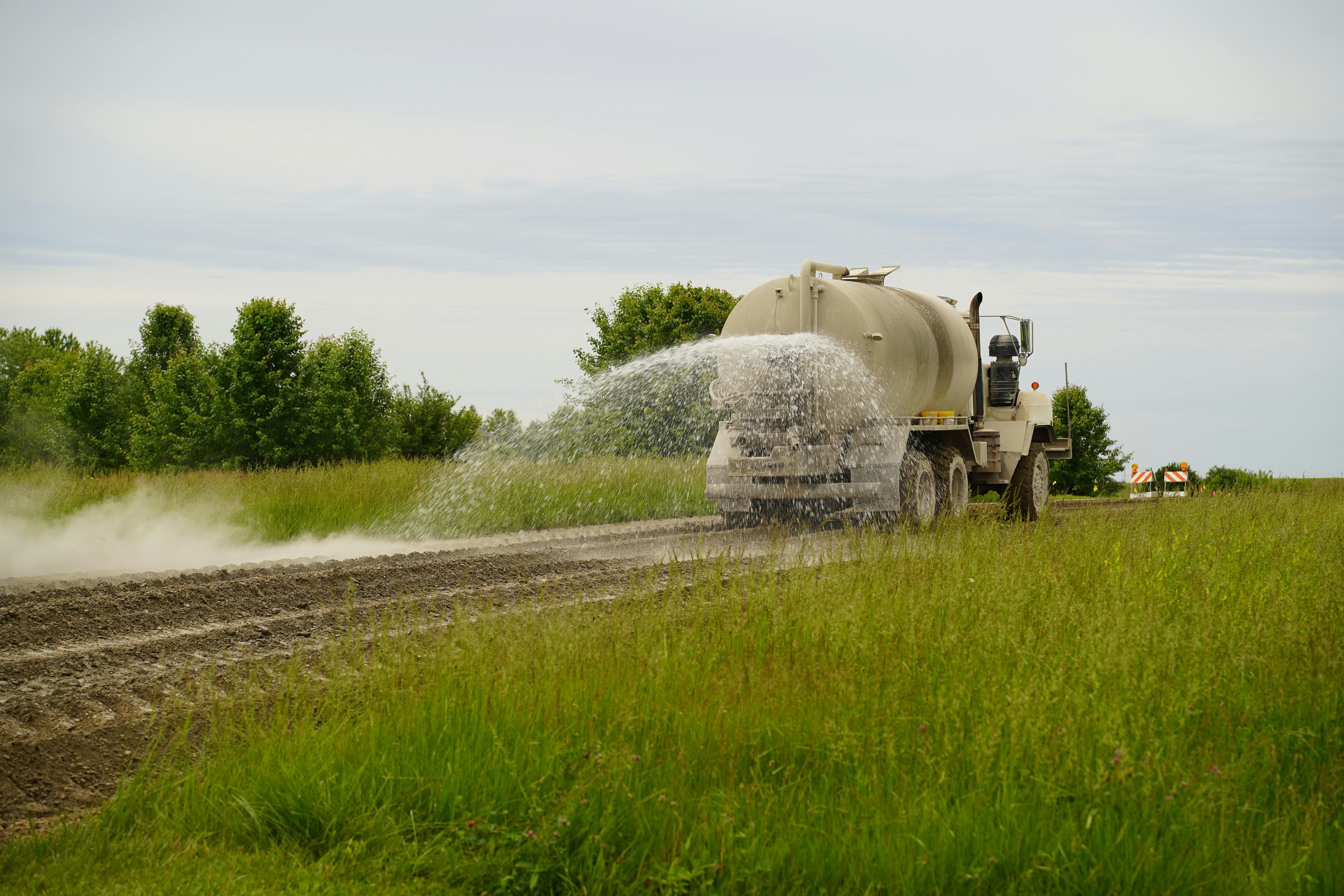
A water hauling company is a trucking company that works on oil leases. Vacuum trucks and transports pick up produced water, flowback and fresh water and run it to disposal wells, frac sites and pits. The time on location is short; the time on the road is long.
OSHA's oil and gas hazard guidance states that highway vehicle crashes are the leading cause of fatalities among oil and gas extraction workers, and that roughly four of every ten workers killed on the job in that industry die in a highway vehicle incident. Operators and their prequalification platforms treat the auto line of a hauler accordingly.
That is why, for a water hauler, the MSA review starts with the auto policy: symbols, limits, filings, the pollution endorsement and how drivers and leased trucks are handled. The GL still matters, but it is rarely where the trouble is. For the general auto picture, see oilfield auto insurance and MCS-90.
| Coverage | What MSAs commonly ask for | Water hauling note |
|---|---|---|
| Commercial auto | $1M combined single limit is common; some ask for more on tank trucks | Must be at least the regulatory minimum for your operation and load type |
| Auto pollution | Often "pollution coverage including while in transit" | Needs an endorsement or a separate policy; the standard auto form excludes it |
| General liability | $1M per occurrence / $2M aggregate is common | Loading and unloading at the lease and at the disposal well |
| Workers comp / employers liability | Statutory WC; EL often $1M/$1M/$1M | Drivers are employees for WC unless genuinely independent |
| Umbrella / excess | Commonly $5M to $10M | Umbrella underwriters look hard at fleet size, radius and driver records |
| Cargo / on-hook | Rarely required for produced water | More relevant if you also haul crude or chemicals |
MCS-90 and the federal minimums: what actually applies
The federal financial responsibility rules are in 49 CFR Part 387. The parts that matter to a water hauler:
- §387.3 applies the rules to for-hire carriers of property in interstate commerce, and to carriers of hazardous materials, hazardous substances or hazardous wastes in interstate, foreign or intrastate commerce. Non-bulk intrastate shipments of oil and hazardous materials are carved out, and vehicles under 10,001 pounds GVWR are generally excluded.
- §387.7 says proof of financial responsibility is a Form MCS-90 endorsement, an MCS-82 surety bond, or an FMCSA self-insurance authorization, kept at the carrier's principal place of business.
- §387.9 sets the minimum levels shown below.
Where produced water lands in that table depends on how the load is classified under the hazardous materials regulations, which in turn depends on what is in it. We will not tell you a blanket answer, because there is not one. What we can do is read your MSA and your actual operation and tell you which filings your auto policy needs.
The MCS-90 itself is not coverage in the usual sense. IRMI describes it as providing insurance only on a reimbursement basis: if a claim would not otherwise be covered, the insurer pays the public and then has the right to seek reimbursement from you. Operators and reviewers sometimes ask for it on the certificate even when it does not legally apply; see what is MCS-90.
| Type of carriage | Commodity | Minimum |
|---|---|---|
| For-hire, interstate or foreign | Property (nonhazardous) | $750,000 |
| For-hire and private, interstate, foreign or intrastate | Certain bulk hazardous substances and listed high-hazard materials (as defined in the rule) | $5,000,000 |
| For-hire and private, interstate or foreign in any quantity; intrastate in bulk only | Oil listed in 49 CFR 172.101; hazardous waste, materials or substances not in the $5M row | $1,000,000 |
Texas registration and the RRC waste hauler permit
Two Texas layers sit next to the federal rules.
TxDMV motor carrier registration. Texas rule 43 TAC §218.16 requires a motor carrier registered under Transportation Code Chapter 643 to file and maintain proof of automobile liability insurance for its registered vehicles, and requires the insurer to file it. If your insurer changes, the filing has to change with it. A lapse here can sideline trucks regardless of what the certificate says.
Railroad Commission waste hauler permit. The RRC requires a waste hauler permit for anyone who transports non-hazardous oil and gas waste for hire, and lists produced water among the RCRA-exempt waste streams in scope. The permit requires an active Form P-5 organization report and annual renewal, and it cannot be used to haul hazardous oil and gas waste under Statewide Rule 98.
Neither of these is an insurance policy, but operators and prequalification platforms increasingly check them alongside the certificate. A water hauler with the right auto limits and a lapsed waste hauler permit still has an onboarding problem.
Pollution in transit: the gap most haulers find after the spill
The standard business auto and motor carrier forms exclude pollution from the cargo being carried. For a hauler whose cargo is produced water, that exclusion goes to the heart of the operation: an overturned transport can mean a cleanup bill and third-party damage claims that the auto policy does not pay.
The usual answers:
- Broadened auto pollution endorsement (ISO CA 99 48). IRMI notes that when this endorsement is attached to a motor carrier's policy, the pollution exclusion is modified but not removed entirely. Read what it gives back.
- Transportation pollution liability. A separate policy, often written alongside contractors pollution liability, that covers pollution from cargo in transit and during loading and unloading.
- Contractors pollution liability. Covers pollution from your operations at the lease or the disposal site. It usually does not cover the road.
Watch the handoffs. Spills happen while hooking up at the tank battery, while offloading at the SWD, and on the road between. Each one can fall under a different policy. See oilfield pollution liability and do I need pollution coverage to haul produced water.
Which policy answers a pollution loss
Chapter 127 and the water hauler
Water haulers sometimes assume the Texas Oilfield Anti-Indemnity Act is about drilling contractors. It is not limited to them. Chapter 127 defines "well or mine service" to include transporting oil, brine water, fresh water, produced water, condensate and other liquid commodities in connection with a well, and it covers agreements for incidental transportation and equipment rental too (§127.001).
So the usual rule applies: indemnity for the operator's own negligence in personal injury and property injury is void under §127.003, unless supported by insurance under §127.005. For a mutual indemnity, the obligation is limited to the coverage and dollar limits each party agreed to obtain; for a unilateral indemnity, required insurance may not exceed $500,000.
Two limits on that protection matter to haulers:
- Pollution. §127.004(2) excludes property injury that results from pollution, including cleanup and control of the pollutant. A clause making you responsible for cleanup is outside the Act.
- Pipelines. The definition excludes transporting gas or natural gas liquids by pipeline and construction or maintenance of pipelines. Water hauling by truck is in; pipeline work is a different analysis.
The knock-for-knock page explains how the reciprocal structure usually works for injuries and equipment.
Drivers, owner-operators and leased trucks
Many water hauling companies run a mix of company trucks and owner-operators. Each arrangement changes the insurance:
- Company drivers are employees for workers comp and drive scheduled autos.
- Owner-operators under your authority often need to be scheduled on your auto policy or covered by a lease arrangement, and many MSAs say you remain responsible for them as subcontractors.
- Brokered loads to another carrier need that carrier to carry the operator's requirements, name the operator and waive subrogation, the same as any subcontractor.
Operators expect the flow-down to be clean. If an owner-operator's truck overturns hauling the operator's water and the paperwork is unclear about whose policy responds, the operator's first call is to you.
How MSA insurance requirements flow down
Where water hauling certificates get rejected
The reviewer at ISNetworld or Avetta compares your certificate and endorsements to the operator's loaded requirements. For haulers, these are the recurring gaps. See ISNetworld insurance requirements and Avetta insurance requirements for how each platform handles reviews.
| MSA requirement | Where the gap usually is |
|---|---|
| Auto pollution coverage including in transit | No CA 99 48 or equivalent; certificate silent on pollution |
| Any auto (symbol 1) or owned, hired and non-owned | Scheduled autos only; owner-operator trucks not covered for the company |
| MCS-90 shown on certificate | Not attached because the carrier is intrastate only; needs an explanation, not a guess |
| Auto additional insured and waiver of subrogation | GL endorsed, auto not; CA 04 44 waiver missing |
| Umbrella over auto at the required limit | Umbrella excludes or sublimits auto for tank trucks |
| Texas WC waiver of subrogation | Missing WC 42 03 04, or drivers treated as 1099 with no WC at all |
What to send for a review
For a water hauler, send the MSA insurance and indemnity sections, the operator's ISN or Avetta requirements, your auto declarations with the endorsement list, and a short description of the fleet: number of trucks, company versus owner-operator, and whether you ever cross into New Mexico, Oklahoma or Louisiana. Interstate work changes the federal analysis.
We will tell you which filings your operation needs, whether your pollution coverage follows the load from the tank battery to the disposal well, and where the certificate will be flagged. Basin notes are on the Permian Basin and Eagle Ford pages.
Common questions
Do I need pollution coverage to haul saltwater in Texas?
Practically, yes. The standard auto policy excludes pollution from cargo, and most operator MSAs ask for pollution coverage that includes transit. That usually means an auto pollution endorsement such as CA 99 48 or a transportation pollution policy. See pollution coverage for hauling produced water.
Is produced water a hazardous material for MCS-90 purposes?
It depends on how the load is classified under the hazardous materials regulations and whether you operate interstate. There is no single answer for every load. Have your operation reviewed before you assume you do or do not need the higher federal minimums.
What is the minimum auto insurance for a water hauling truck?
Under 49 CFR 387.9, the federal minimum is $750,000 for interstate for-hire nonhazardous property and $1,000,000 for oil and listed hazardous materials, with $5,000,000 for certain high-hazard loads. Operator MSAs and umbrellas often require more than the regulatory minimum.
Do I need an RRC permit to haul produced water?
The Railroad Commission requires a waste hauler permit to transport non-hazardous oil and gas waste for hire, and produced water is within that waste stream. It requires an active P-5 and annual renewal.
My owner-operators have their own insurance. Am I covered?
Not automatically. Your MSA likely holds you responsible for anyone hauling under your name. Their policies need to meet the operator's requirements and name the operator, and your own auto policy should address hired and non-owned trucks.
Does the Texas anti-indemnity act apply to water haulers?
Yes. Chapter 127 defines well services to include transporting produced water, brine and fresh water. But it excludes property damage from pollution, so a cleanup indemnity is outside its protection.
Sources
- eCFR: 49 CFR 387.9, Financial responsibility, minimum levels. Schedule of limits: $750,000 nonhazardous, $1,000,000 oil and listed hazmat, $5,000,000 certain high-hazard loads.
- eCFR: 49 CFR 387.7, Financial responsibility required. Proof by Form MCS-90, MCS-82 or self-insurance authorization, kept at the principal place of business.
- eCFR: 49 CFR 387.3, Applicability. Interstate for-hire carriers and hazmat carriers including intrastate; non-bulk intrastate and under-10,001-lb exceptions.
- IRMI glossary: MCS-90 endorsement. MCS-90 operates on a reimbursement basis; CA 99 48 modifies but does not delete the auto pollution exclusion.
- Railroad Commission of Texas: Waste Haulers. Waste hauler permit for non-hazardous oil and gas waste hauled for hire; produced water in scope; P-5 and annual renewal.
- 43 Tex. Admin. Code §218.16 (Cornell LII). Texas registered motor carriers must file and maintain proof of auto liability insurance.
- Tex. Civ. Prac. & Rem. Code ch. 127 (Texas Legislature). Well service includes transporting produced water and brine (§127.001); pollution property injury excluded (§127.004).
- OSHA: Oil and Gas Extraction, Hazards. Highway vehicle crashes as the leading cause of oil and gas extraction worker fatalities.
This page explains insurance, not law. Have your attorney review indemnity and contract language; our job is making the insurance match it.
Keep reading
Coverage
What auto insurance does my oilfield fleet need, and what is the MCS-90 for?
Coverage
Does my oilfield GL cover a spill, or do I need separate pollution coverage?
Questions
Do I need pollution coverage to haul produced water?
Questions
What is an MCS-90 endorsement, and does my oilfield truck need one?
Contract requirements
What does the Texas Oilfield Anti-Indemnity Act mean for my MSA and my insurance?
Coverage
How much umbrella do operators want, and why does my certificate keep failing on it?